
What Makes a Second a Second?
Handmaking fine bone china is a very lengthy process - every piece we make is formed from liquid clay into a useable, beautiful object and goes through many stages and three firings to get to that point, so it's quite normal for us to have objects make it all the way through the process but pick up something along the way that's just not quite right. When we assess an item we ask some key questions of it that determine whether it is classed a first or, if not, a second.
All of our seconds are always functional and food safe, they might just look a little different from our firsts - perhaps the shape isn't quite right, perhaps there's a drop of paint where it shouldn't be. They are perfectly imperfect wares, with more distinctive visual signs from the making process - they are still objects for life, just with a little more character.
OUR ANNUAL SECONDS SALE
At Feldspar, we take pride in the fact that our wares pass through many careful hands before taking their finished forms as Objects for Life. Each Feldspar object is unique, with tiny variations that we embrace - the marks of the maker. Occasionally, our bright white, minimally decorated wares do not meet the expectations of both ourselves and our customers, these are put aside and categorised as ‘Seconds’.
Once a year we have our Seconds Sale, where you can buy these wares at a discounted price.
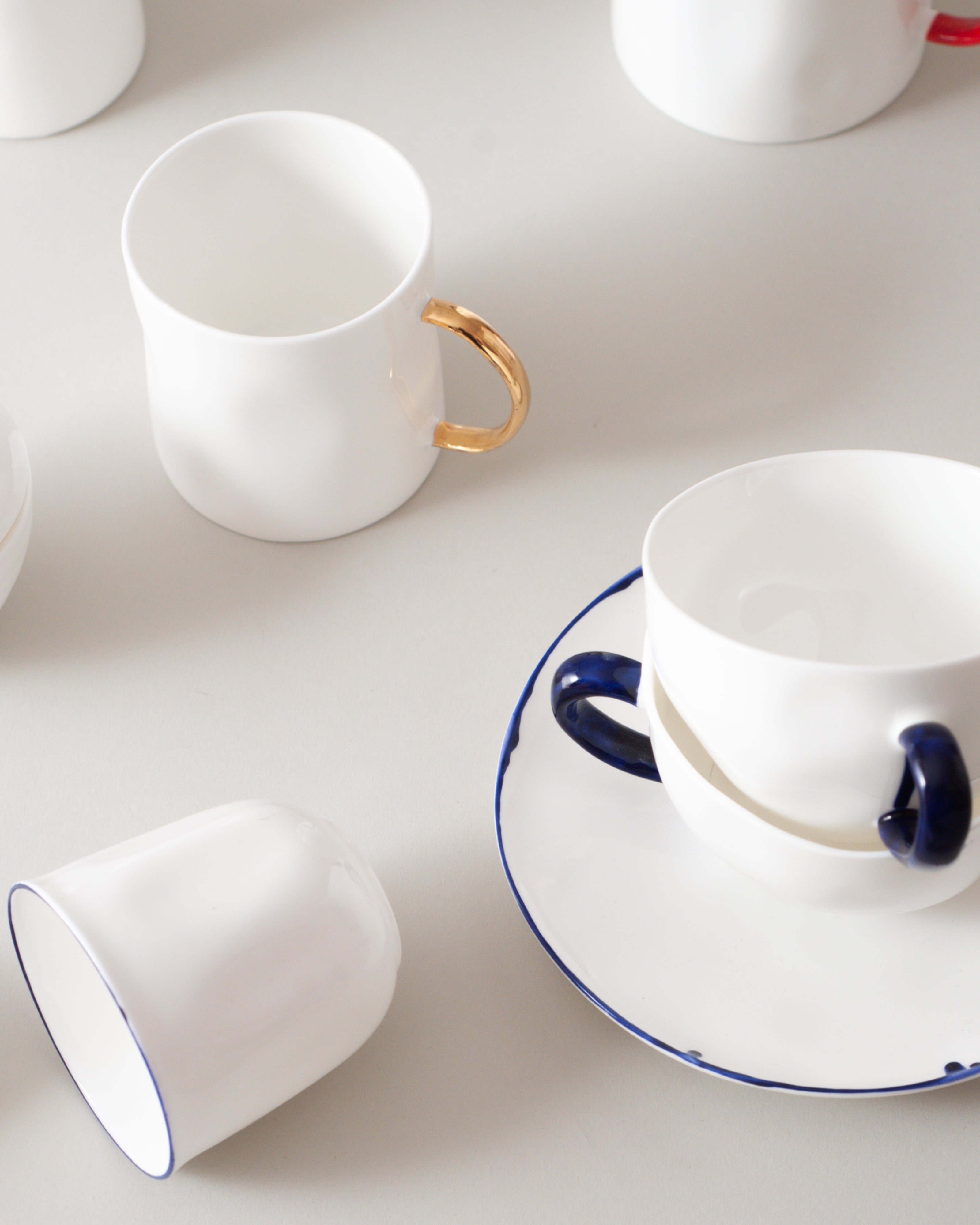
FIRSTS vs SECONDS
There are many opportunities for things to go awry in the creation of a hand made, hand painted fine bone china object. Our team's primary concern is that a Feldspar object is safe and functional to use - therefore, all our objects, Firsts or Seconds, will meet this benchmark, always.
This means that the main point of difference between Firsts and Seconds is their aesthetic quality. Beauty is in the eye of the beholder though, and what some may embrace, others may not be quite so keen on.
Whilst we will do our absolute best to explain what you can expect from your Seconds wares, if you are not a fan of the unknown, or if you like your Feldspar objects more uniform or ‘perfect’, then our Seconds Sale is perhaps not the best choice!
CASTING
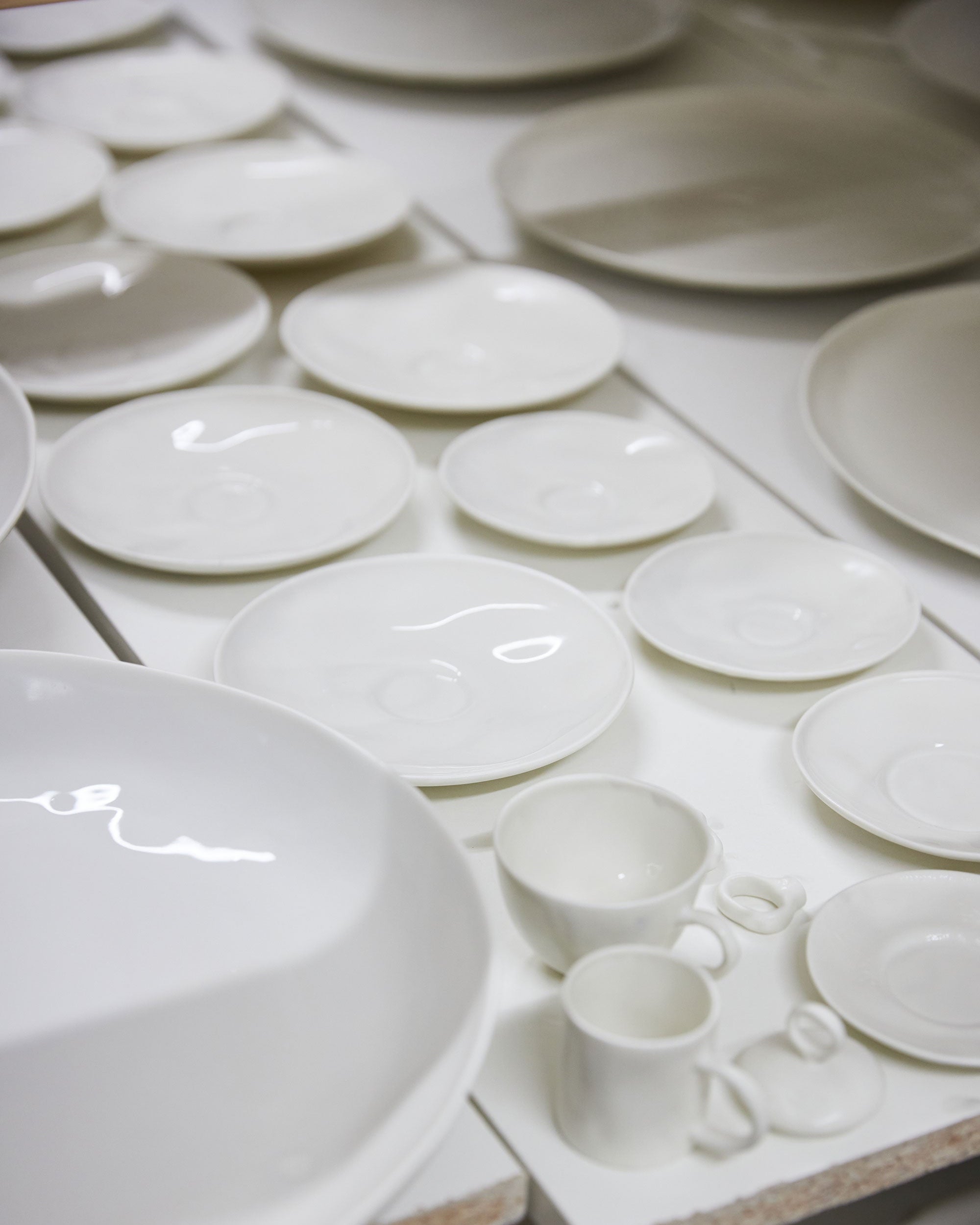
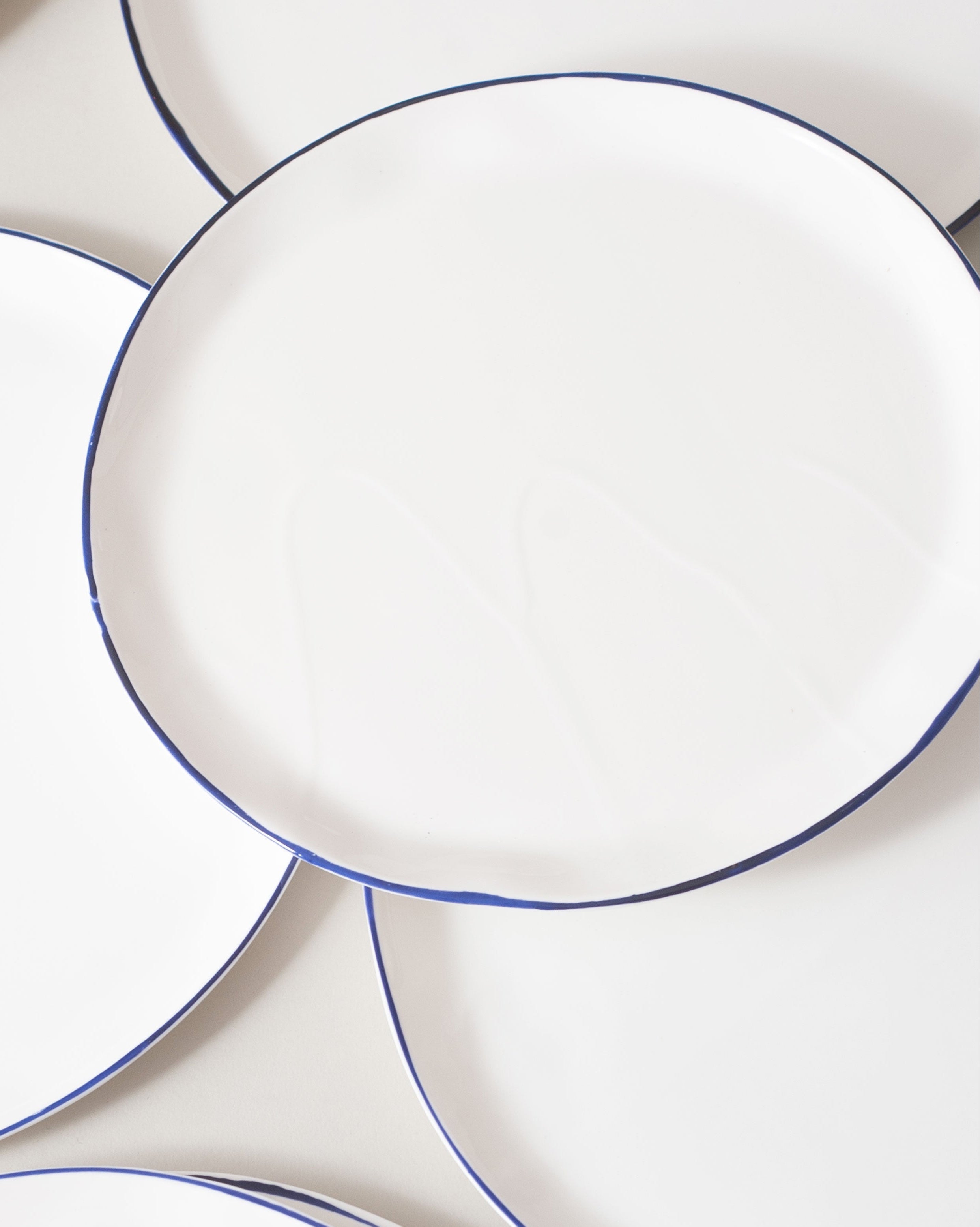
We make our ceramic objects using a method called Slip Casting. This involves pouring liquid clay, or slip, into plaster moulds. The porous plaster gently draws moisture from the clay, allowing a fine wall to form against its surface. Once the desired thickness is reached, the excess slip is poured away, and the piece is left to rest and quietly firm before the next stage.
Occasionally, the drips of poured slip remain visible on the surface of an object. These are known as slip trails, and we tend to value them—they offer a quiet record of the making, and a small glimpse into the process. That said, if a trail becomes too pronounced, or disrupts the evenness of the surface, the piece is set aside as a second.
SPONGING & FETTLING
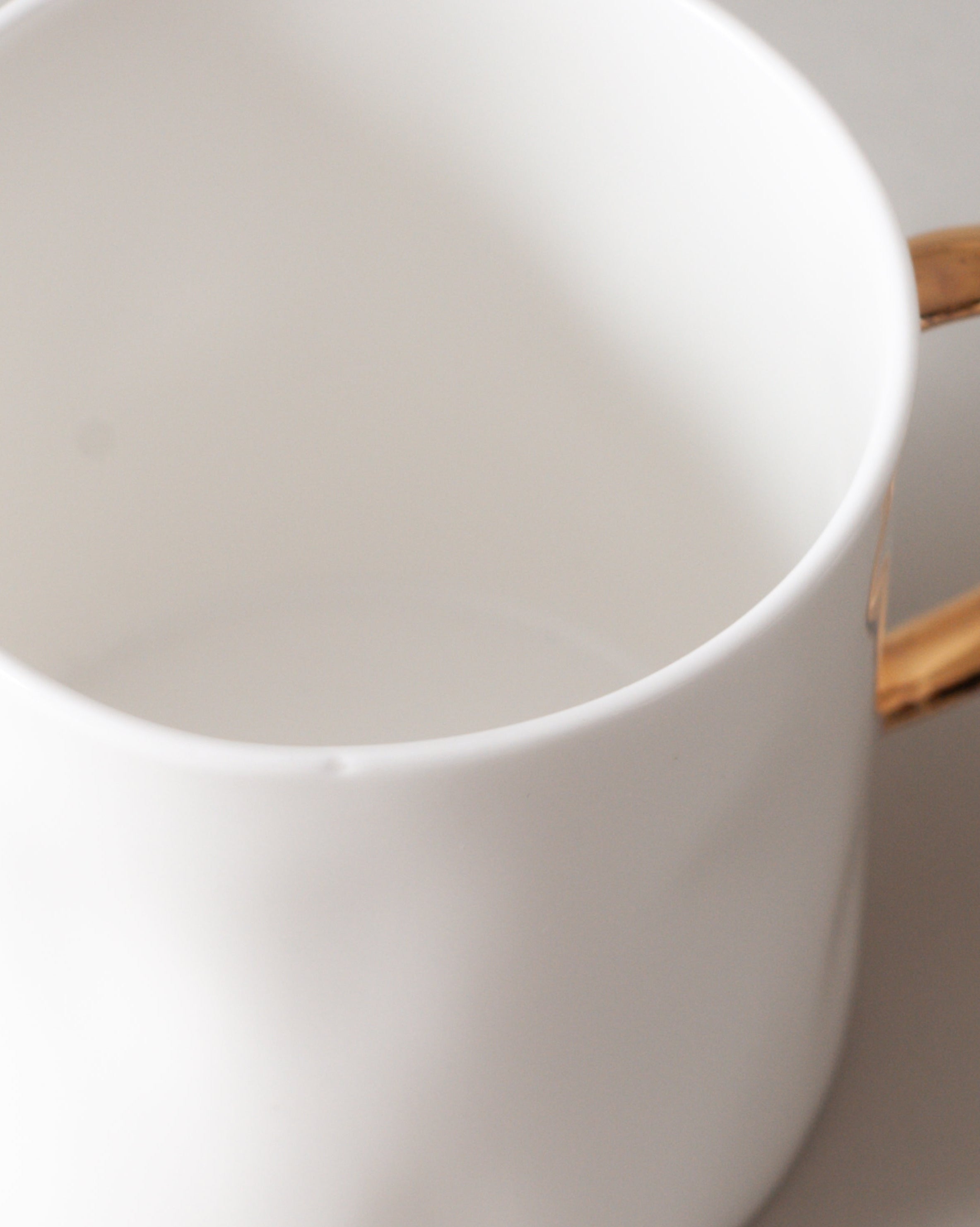
The wares are then sponged and fettled, a process done by hand where the clay 'seams 'and sharp edges are carefully removed. Various quality issues may arise here - an overly sharp edge, a missed knick that's then glazed over or a missed bump in the clay that's not supposed to be there would make an object a Second.
FIRING
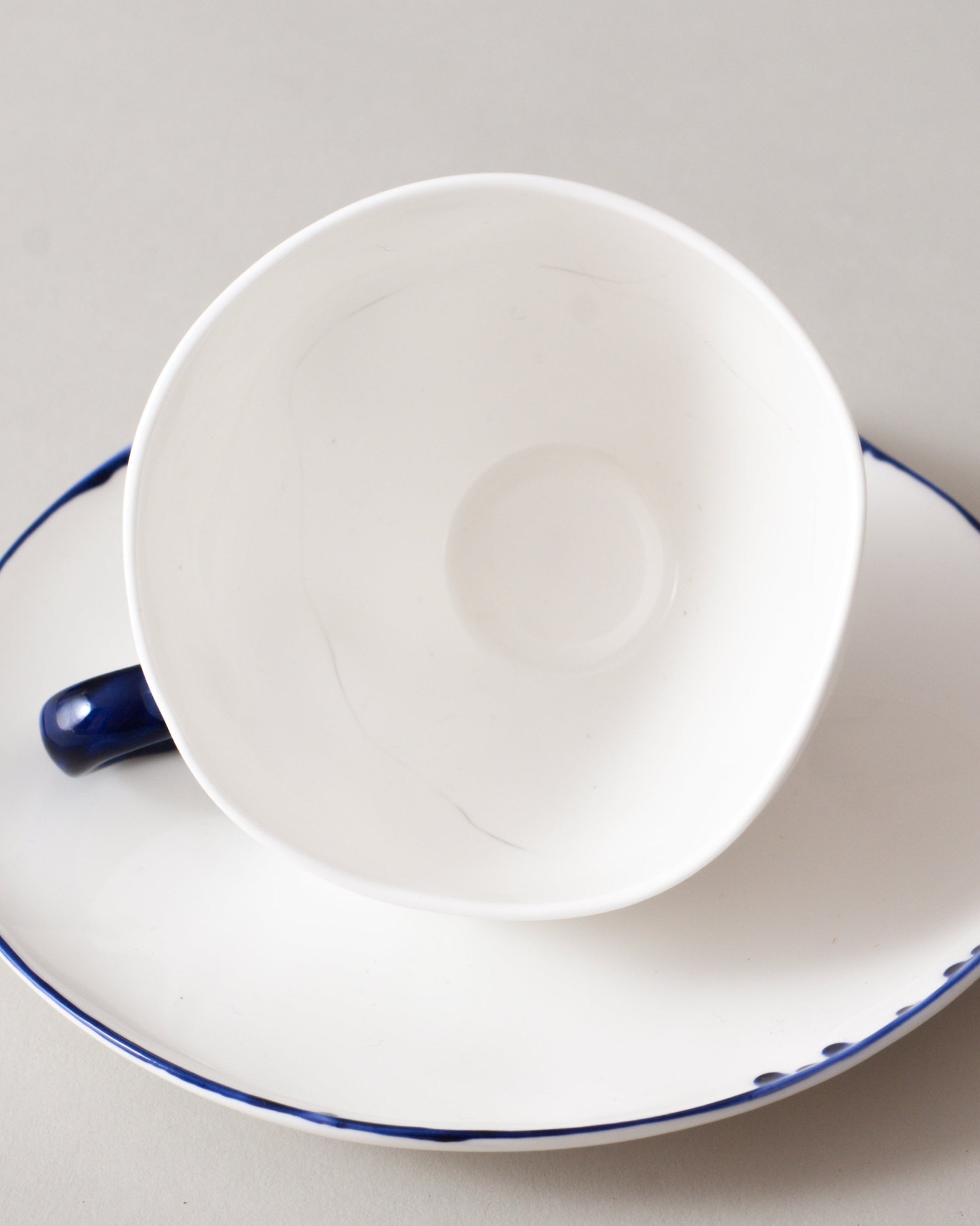
Our pieces endure an enormous amount of heat on their journey to becoming a finished Object for Life. Each one is fired a minimum of three times - so naturally things can go awry. During the first firing, warping and twist can occur, causing a piece to lose its desired shape - think a coffee mug that is looking more oval than circular.
While we enjoy gentle variation in our wares, when items are considerably warped we consider them seconds

KILN ISSUES
Generally, issues that arise from firing can be fixed at this stage. However, sometimes a piece may fuse to the kiln shelf and can end up with little chips in the base, or tiny bits of dust or debris from a kiln shelf above may fall onto a piece during firing, which can cause unwanted texture.
GLAZING
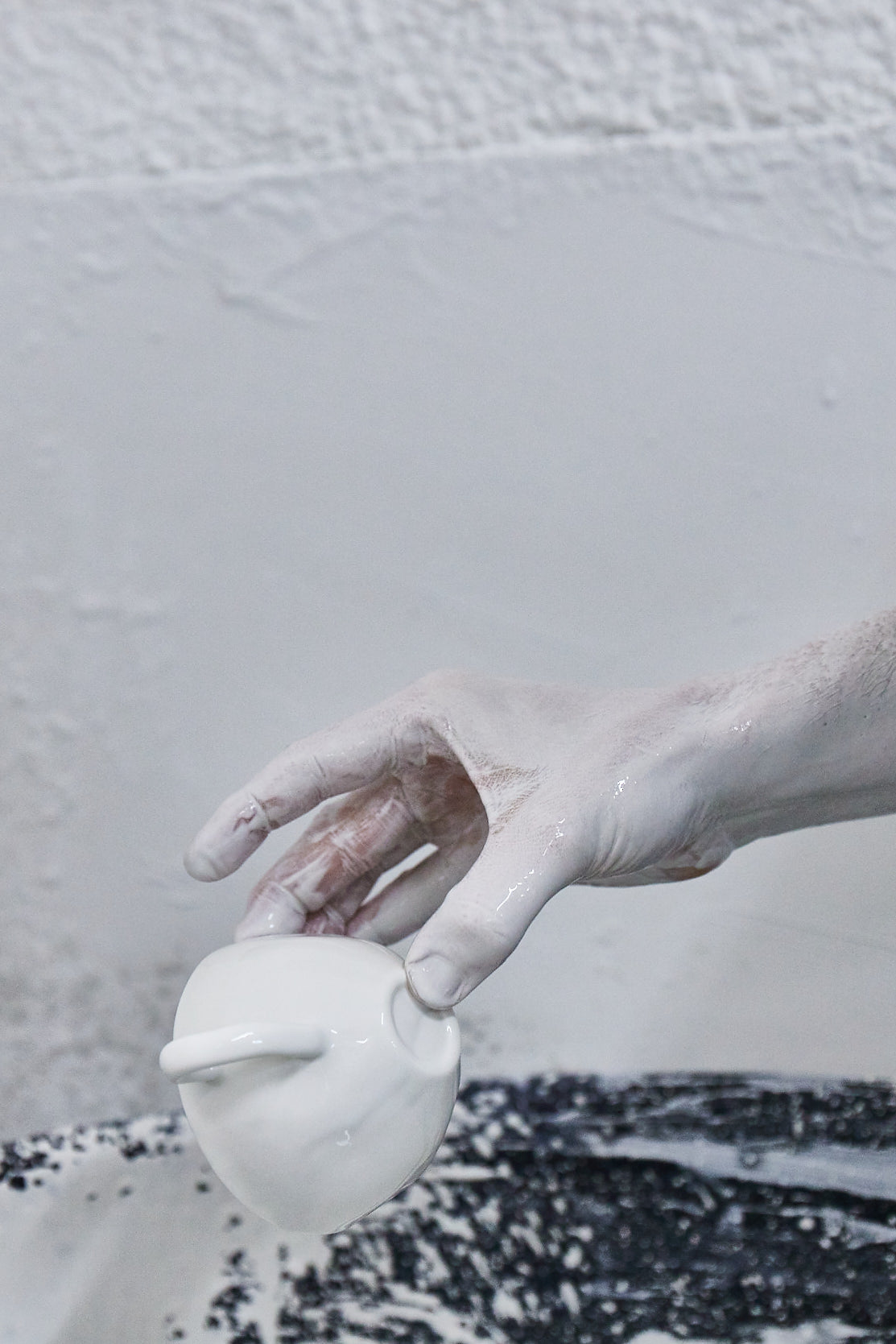
All of our objects are dip glazed by hand, which can bring tiny variations in the glazed surface - sometimes a little mark where a finger held a piece, other times, a drip of glaze. Another glazing issue we encounter is glaze crawling, where tiny parts of glaze pull away from the clay surface during firing, appearing like small scratches on the surface.
We tend to take these pieces on a case by case basis as to whether or not they are a First or Second, though it should be noted that as fine bone china is not absorbent at all (it is fully vitrified at the bisque firing) any exposed areas do not hinder the food safeness or usability of a piece.
DECORATING
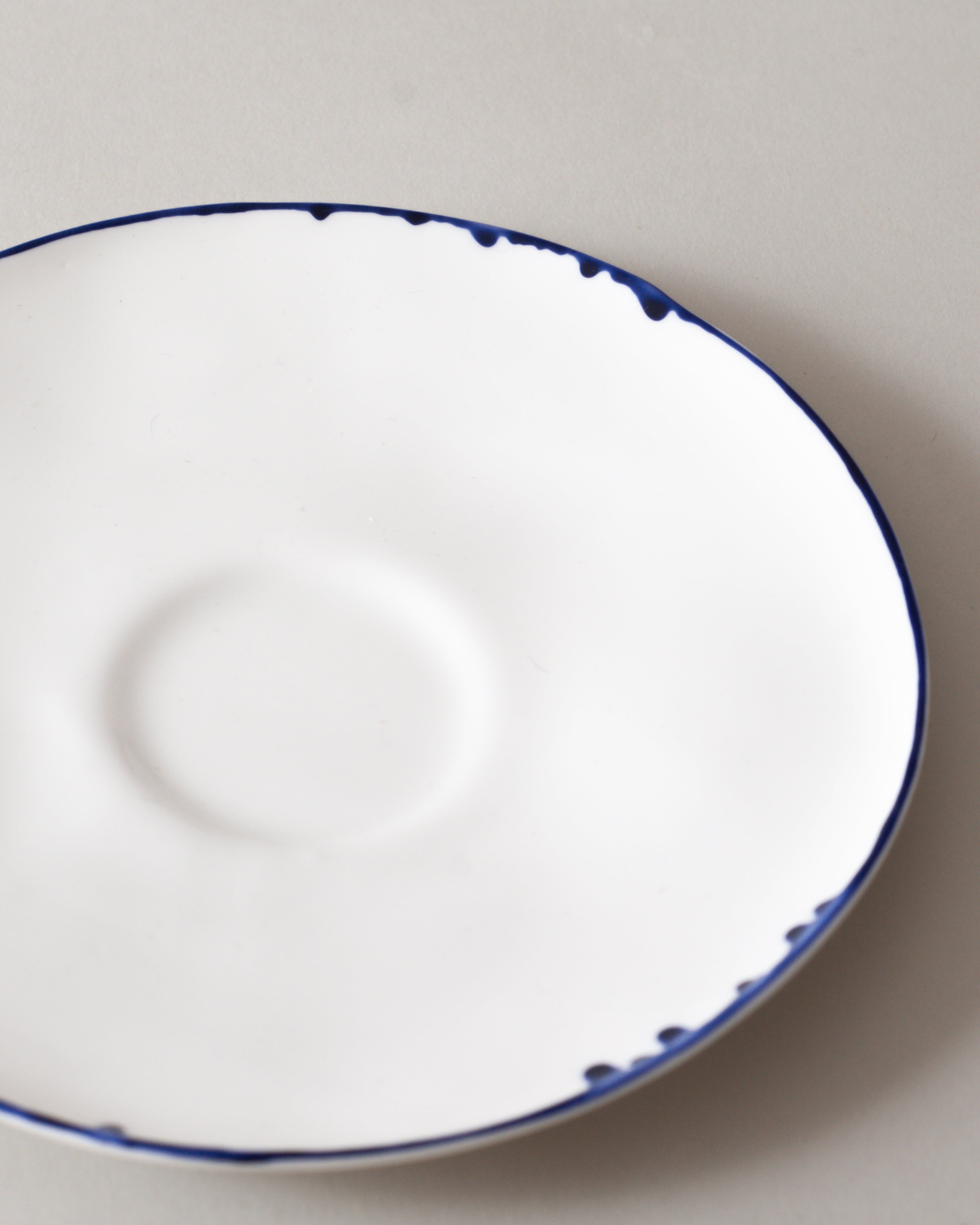
One of the more visually obvious reasons for a piece being deemed a Second lies in the final stage of the making - decorating. Some decorating mishaps are more obvious than others, but all are taken into consideration. Occasionally a colour won’t behave as intended - leaving a drip, a textured surface or even taking on the appearance of crocodile skin. Other visual imperfections include specks of colour on the bright white clay body where they shouldn't be!
Frequently Asked Questions
Handmaking fine bone china is a very lengthy process - every piece we make is formed from liquid clay into a useable, beautiful object and goes through many stages and three firings to get to that point, so it's quite normal for us to have objects make it all the way through the process but pick up something along the way that's just not quite right. When we assess an item we ask some key questions of it that determine whether it is classed a first or second.
All of our seconds are always functional and food safe, they might just look a little different from our firsts - perhaps the shape isn't quite right, perhaps there's a drop of paint where it shouldn't be. They are perfectly imperfect wares, with more distinctive visual signs from the making process - they are still objects for life, just with a little more character.
Quantity, not quality! The opposite of our usual mantra, but for items we have a lot of seconds stock of we have marked the discount higher. Every item is carefully checked and all are fully functional and food safe, but if we have a lot of a particular item or colour - usually due to an errant kiln firing - then we have set them at a higher discount.
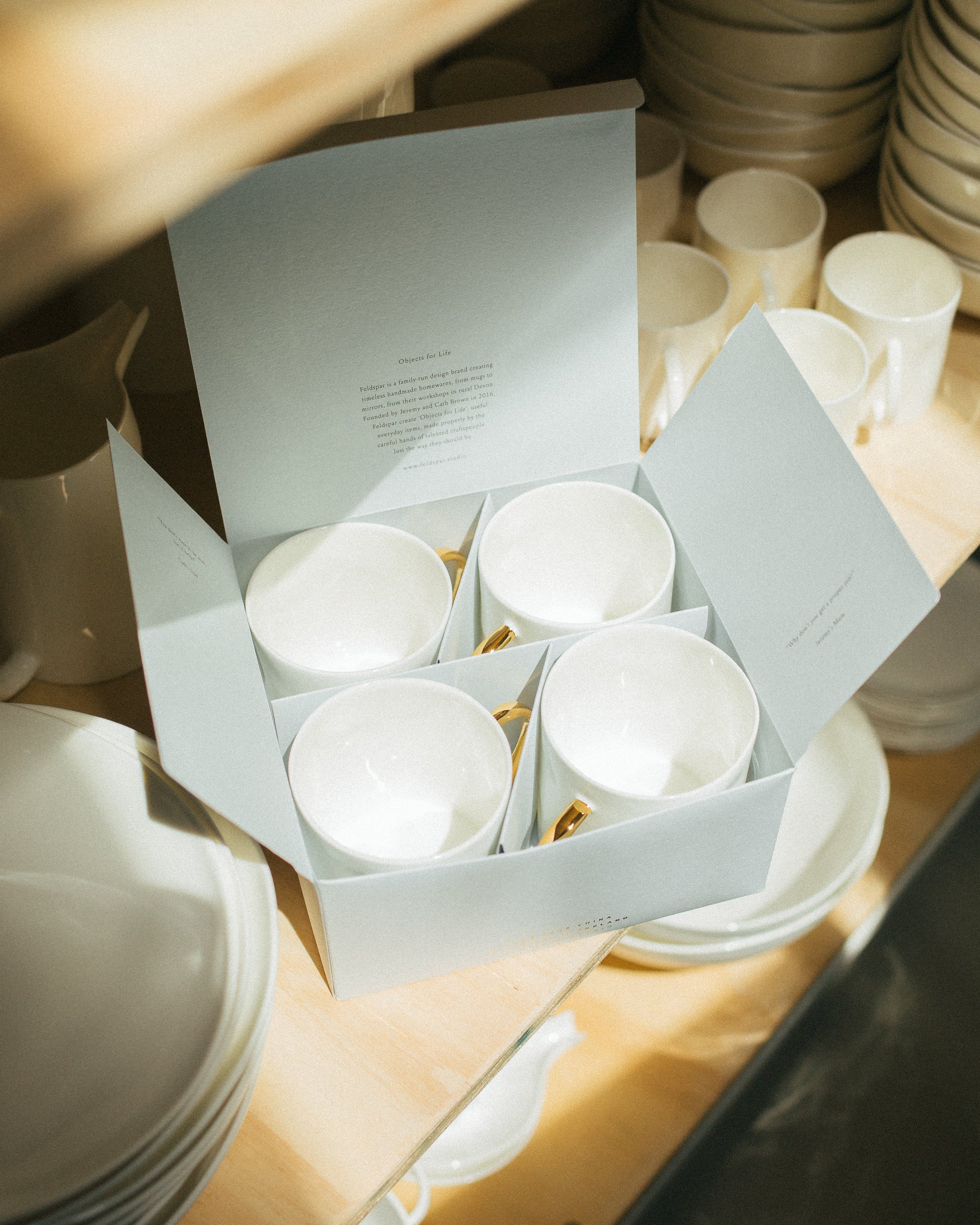
No - all seconds are sold unboxed, which means that they will arrive carefully wrapped in our special paper bubblewrap rather than in gift boxes.
Please allow 3-5 working days for delivery. Our Seconds Sale is always hugely popular but there is only a small team of us picking, packing and posting everything out so please bear with us and always email enquiries@feldspar.studio if you are in a hurry!
No. Seconds are FINAL SALE and are not eligible for refunds or exchanges. Please be sure to contact us enquiries@feldspar.studio with any questions you may have prior to purchase!